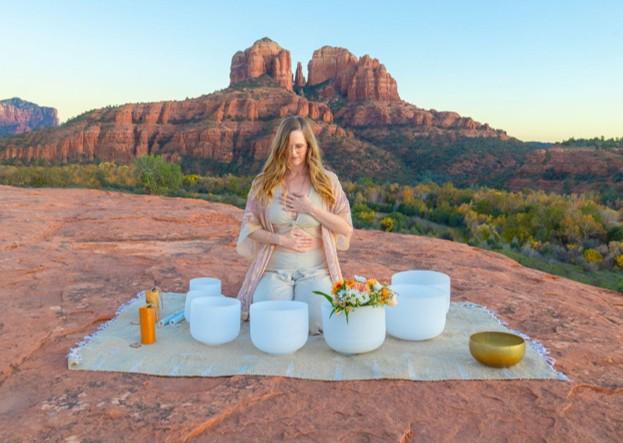
Sedona's trails, vortex sites, and scenery are extraordinary. The choices are rarely the problem. The problem is that people arrive here still running on the same nervous system settings they use to manage deadlines and emails. You can change your location in two hours; changing your physiological state takes something more deliberate. There's a reason Sedona has drawn healers, seekers, and wellness practitioners from around the world. The land has a particular quality, but only if you slow down enough to receive it. Most visitors spend the first day powering through hikes and restaurant reservations before finally exhaling somewhere around day three. What if you gave yourself permission to exhale first?
Why Your Nervous System Doesn't Know You're on Vacation
The human nervous system doesn't clock out when you do. It responds to cues, and most of us have spent years conditioning it to stay alert. The drive, the flight, the anticipation, and even the excitement of travel can keep your body in a low-grade state of activation.
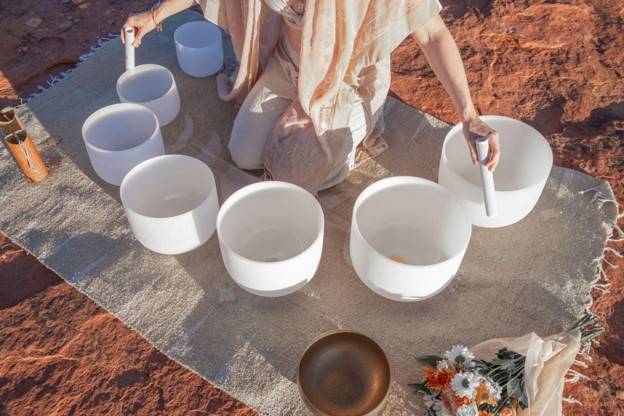
Psychologists sometimes call this transition lag, the gap between where your body is and where you actually are. You can be standing in front of Cathedral Rock and still be partially back in your inbox. What your nervous system needs is a signal. Something that says: you can stop now. That signal doesn't have to be complicated. But it does have to be intentional.
What a Sound Bath Actually Does
A sound bath is exactly what it sounds like. You lie down, fully clothed, while a practitioner surrounds you with resonant sound using instruments like crystal and himalayan bowls, gongs, and chimes. You don't do anything. You don't try to meditate or achieve a particular state. You just receive. There’s science behind why it works. Slowly layered, harmonically rich sound activates the parasympathetic nervous system, the branch responsible for rest, digestion, and repair. Your heart rate slows. Your breath deepens. Brainwave activity naturally shifts toward slower patterns, moving away from the alert beta waves of daily functioning toward the slower alpha and theta states associated with deep relaxation, and creativity.
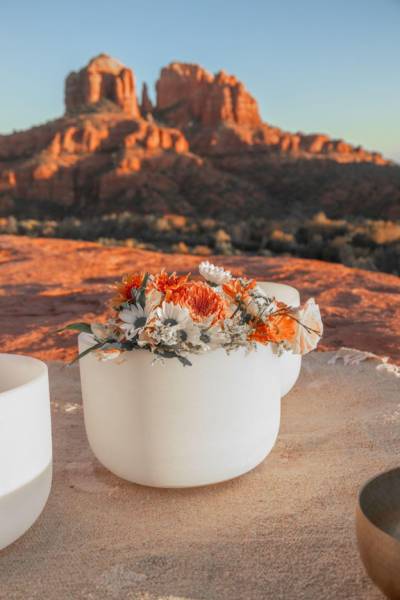
It works in part because sound bypasses the thinking mind. You don't have to believe in it. The body simply responds to the acoustic environment it's given. For someone arriving in Sedona still wired from a work week, a sound bath at the start of a trip isn't a luxury add-on. It's an accelerant. It's the thing that gets you to the slower, more present version of yourself faster than almost anything else.
Why Sedona Is the Right Place for This
Sedona already has a reputation for doing something to people. Some attribute it to the vortexes. Some to the landscape, the minerals in the rock, the quiet. Whatever the explanation, the conditions here are conducive to the kind of deep nervous system rest that a sound bath creates. A sound bath in Sedona lands differently than one in a strip mall wellness studio.
Some practitioners here offer private, mobile sound bath sessions, meaning they come to wherever you're staying, whether that's a vacation rental, or a private property. There's something particularly powerful about a sound bath in a space that already feels like yours for the week. The transition from the session into the rest of your day is seamless.
Who This Is Really For
You don't need to believe in anything in particular or be familiar with the wellness world to benefit from a sound bath. If you have a nervous system, and you do, you're a candidate. That said, sound baths tend to resonate most with people who:
- Have been running hard and want to actually feel like they're on vacation before day two
- Are sensitive to overstimulation and want something quieter than a group class or tour
- Have tried meditation and found their mind too busy to get anywhere
- Are traveling with a partner, family, or friend group and want a shared, grounding experience to open the trip
What to Expect in a Session
A private sound bath typically runs between 60 and 90 minutes. You'll be guided to get comfortable, usually lying or sitting, and given a few minutes to settle in before the practitioner begins. Most people notice within the first several minutes that their breath has changed and their body feels heavier in a welcome way. Some fall into a sleep-like state. Others experience a quality of awareness that feels both deeply relaxed and somehow more vivid than normal. A small number feel nothing unusual at all, also valid and still physiologically beneficial.
After the session ends, there's a gentle return, a few minutes of quiet before you re-enter the world. For the rest of the day, softer activities tend to land better: a walk, a meal, a slow evening. The point is you're now in a different state than the one you arrived in.
Making It the First Thing, Not the Last
The instinct for most people is to save something like this for the end of the trip, a treat after you've done the "real" activities. But there's a compelling argument for flipping that. When you regulate your nervous system on arrival day, you experience everything that follows differently. You're not catching up to the pace of the place; you arrive there early and spend the rest of your time in it. Think of it as a threshold ritual, a deliberate practice that marks the crossing from one mode of life into another. Many cultures have historically used sound, breath, and ceremony for exactly this purpose: to signal a transition.
You've made it to Sedona. Let that actually mean something from the moment you arrive.