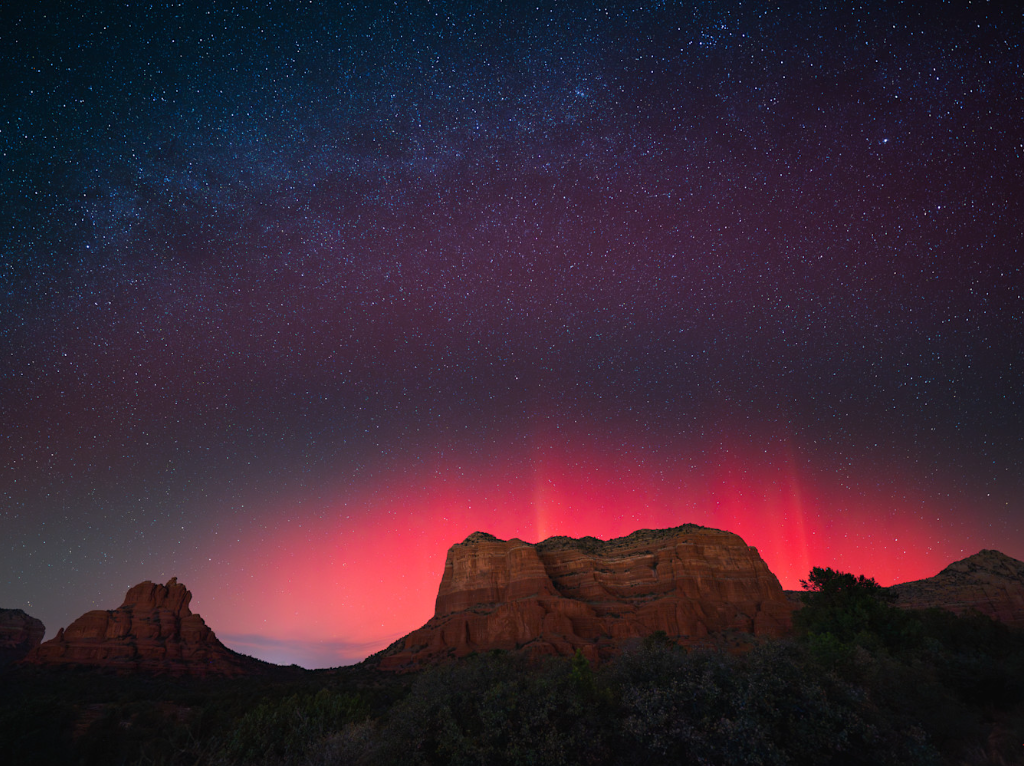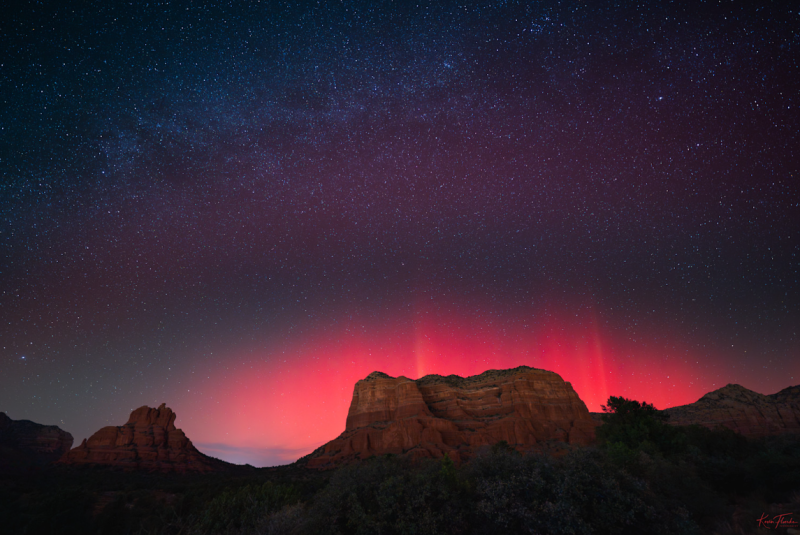
Photo credit: Kevin Floerke
The Dark Sky Designation
The International Dark-Sky Association (IDA) awarded Sedona its Dark Sky Community status, acknowledging the city's efforts to implement responsible outdoor lighting practices. This designation requires communities to demonstrate excellence in outdoor lighting ordinances, community engagement, and public education about the importance of dark skies.
Sedona's location in northern Arizona provides a naturally advantageous setting for stargazing. At approximately 4,500 feet in elevation and situated away from major metropolitan areas, the city benefits from clearer atmospheric conditions and reduced light pollution compared to urban centers.
Why Dark Skies Matter
Preserving dark skies offers benefits that extend far beyond astronomy. Excessive artificial light at night disrupts ecosystems, affecting nocturnal wildlife behavior, migration patterns, and predator-prey relationships. Many species, including insects, birds, and mammals, depend on natural darkness for their survival.
For humans, light pollution interferes with circadian rhythms and can impact sleep quality and overall health. Dark skies also provide access to cultural heritage—for thousands of years, humans have navigated by stars and woven celestial observations into their stories and traditions.
Sedona's Lighting Ordinances
To maintain its dark sky status, Sedona has implemented strict outdoor lighting codes. These regulations require that outdoor lights be fully shielded, directing illumination downward rather than allowing it to scatter into the night sky. The ordinances also specify appropriate color temperatures for outdoor lighting, favoring warmer tones that cause less sky glow and are less disruptive to wildlife.
Businesses and residents must comply with these standards, ensuring that new construction and renovations incorporate dark sky-friendly lighting. The community has embraced these measures, recognizing that protecting the night sky enhances Sedona's natural beauty and quality of life.
Stargazing Opportunities
Sedona's dark skies create exceptional opportunities for both amateur and professional astronomy enthusiasts. On clear nights, visitors can observe thousands of stars, the Milky Way's luminous band stretching across the sky, and various deep-sky objects visible to the naked eye or through telescopes.
Several local organizations and tour operators offer stargazing experiences, providing telescopes and expert guidance to help visitors identify constellations, planets, and other celestial phenomena. The combination of Sedona's dramatic landscape and pristine skies creates a uniquely memorable astronomical experience.
Community Involvement
Sedona's dark sky status reflects ongoing community commitment rather than a one-time achievement. Local advocacy groups work to educate residents and businesses about proper lighting practices, while the city continues to monitor and enforce its lighting ordinances.
Public events, including star parties and educational programs, help raise awareness about light pollution and its impacts. These initiatives foster a sense of stewardship among residents and visitors alike, ensuring that future generations can continue to enjoy Sedona's spectacular night skies.
The Broader Impact
Sedona's designation as a Dark Sky Community serves as a model for other municipalities seeking to balance development with environmental preservation. The city demonstrates that responsible lighting practices can maintain public safety and security while protecting the nocturnal environment.
As light pollution continues to increase globally—NASA estimates that the night sky is brightening by approximately 10% each decade—communities like Sedona play a crucial role in preserving pockets of natural darkness. These sanctuaries provide vital habitat for wildlife, opportunities for scientific research, and spaces where people can reconnect with the cosmos.
Sedona's red rocks may be famous for their daytime splendor, but the city's commitment to dark skies ensures that when the sun sets, an equally magnificent show begins overhead—one that has captivated humanity since time immemorial.